
"coffee crop shift"
80 article(s) found
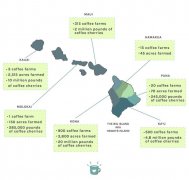
Hawaiian Coffee Bean producing area introduces Kona Coffee Flavor and Taste description Starbucks selects Kau Coffee?
Although Kona Coffee is still the most famous Hawaiian coffee export in history, there is no denying that some new coffee growing areas have emerged. As the focus of agriculture has shifted from sugar to coffee, more and more small coffee farmers have emerged. Let Qianjie introduce the new producing areas of Hawaiian coffee one by one. Although Kona started with the most famous coffee cultivation in Hawaii.
Coffee Storm-will coffee disappear from the world in the future?
Professional coffee knowledge exchange more coffee bean information Please pay attention to the coffee workshop (Wechat official account cafe_style) Climate change has affected the growth of coffee, especially the more sensitive Arabica beans are more sensitive to temperature, the increase in temperature will easily cause insect pests and leaf rust

Introduction to the Flavor description of Fine Coffee beans in Tanzania by Grinding scale treatment
Tanzania's main coffee producing area, located at the foot of Mount Kilimanjaro, is rich in volcanic soil. Some coffee trees planted here are more than 100 years old. Coffee was first introduced by Christians from Kenya to grow coffee. Coffee trees must be carefully taken care of, weeded and fertilized. And old branches must be cut off so that new branches can grow to maintain the quality of coffee beans.

Introduction to the flavor and taste characteristics of Tanzania coffee manor with pure flavor and fragrance.
Tanzania's main coffee producing area, located at the foot of Mount Kilimanjaro, is rich in volcanic soil. Some coffee trees planted here are more than 100 years old. Coffee was first introduced by Christians from Kenya to grow coffee. Coffee trees must be carefully taken care of, weeded and fertilized. And old branches must be cut off so that new branches can grow to maintain the quality of coffee beans.

Yunnan coffee exported to the United States foreign coffee scholars on Yunnan coffee have what kind of evaluation
Yunnan specialty coffee frontier coffee from china. Really? It is the usual reaction to the presence of the subject. Tea yes and rice, obviously. But coffee. Specialty coffee. Really? Yes, exactly! Once the Yunnan coffee we managed to master was snapped up by people who knew about coffee beans, attitudes began to shift rapidly. Sometimes it's a little dismissive at first, but taste it.

Flavor and taste characteristics of Tanzanian coffee with pure flavor introduction of fine coffee in manor producing area
Pyrethrum: mainly planted by small farmers, the planting area is distributed in the southern highlands of Mbeya District and Iringa District. The annual output is estimated at 2500 tons. The centralized management department of the industry is the Tanganyika Bureau of exterminating Chrysanthemum. Oil crops: non-traditional crops, including industrial and oil crops, such as castor, sunflower, peanut, sesame, coconut, cottonseed and soybean. Many provinces are suitable.

Coffee didn't appear in Brazil until 1727, and by 1852, it became the world's largest producer.
By the end of the 19th century, cracks began to appear in the Brazilian economy. Since the beginning of the colony, the country has in turn relied on one of a series of raw materials-Brazilian wood, sugar and gold-as its economic base for exports. The country's social structure is dominated by an elite landowner of European origin who benefit greatly from African, indigenous and mixed ethnic labor.

What is organic coffee? organic coffee is environmentally friendly? the standard of organic coffee in different countries
Organic means growing without pesticides, which sounds simple, right? In fact, it is not as simple as it is literally understood. It also involves the question of where coffee is grown, where it is sold and how it is processed. It is worth noting that organic food is less geographically diverse. About 75% of the world's organic coffee beans are grown in Latin America. The remaining 1/4

Coffee in the cup depends on climate, pests and plant science.
Photo Source: Baidu Pictures A recent report on the impact of climate change on crop cultivation mentioned that the coffee crisis is already brewing, especially the highly praised Arabica coffee beans. A study published in PLOS One in April mainly simulated coffee cultivation in 21 different climatic conditions up to 2050, covering 60 tropical countries on both sides of the equator.
A brief explanation of the birth of coffee beans and the whole process from planting to baking
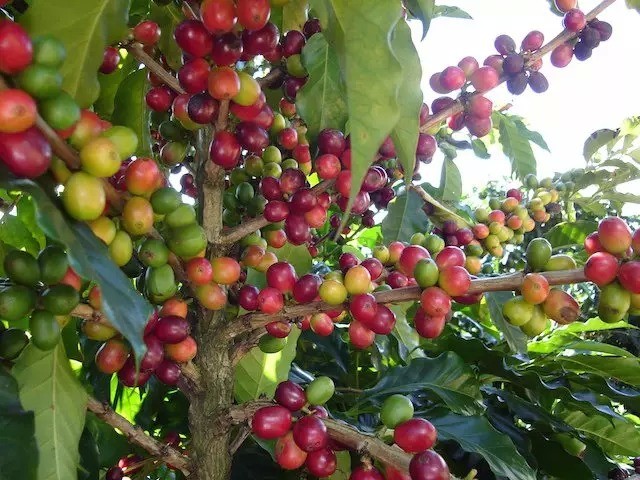
The first is the coffee tree, the father of coffee beans, which is a horticultural perennial cash crop. Well, I can tell at a glance that it is definitely not an ornamental type. And extremely fastidious about the climate, do not like direct sunshine during the day, and can not be less than 10 degrees Celsius at night. For people who find it difficult to feed even cacti, coffee trees can only look at pictures. Here's the brother of the coffee beans.

New Oriental Plateau Coffee SHB (European rules). Washing treatment. Bourbon, Kaddura, Kaduai
Professional coffee knowledge exchange more coffee bean information please follow the coffee workshop (Wechat official account cafe_style) New Oriental Plateau Coffee SHB (European rules). Washing treatment. Bourbon, Kaddura, Kaduai. New Oriental Highland SHB EP, Bourbon-Caturra-Catuai, New Oriente New Oriental producing area greets the first dawn of the country every day.
How did the Salvadoran coffee industry develop in Central America?
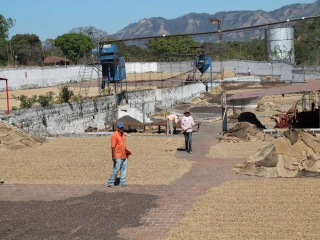
El Salvador was once the fourth largest coffee producer in the world. Coffee arrived in El Salvador in 1880 and quickly became a major source of wealth for the country's upper class. Indigo (a plant dye) was the main export crop of El Salvador and Guatemala before coffee came to El Salvador. However, in 1

New Oriental Plateau Coffee SHB, the most eastern coffee producing area in Guatemala.
For the exchange of professional baristas, please follow the coffee workshop (Wechat official account cafe_style) New Oriental region introduces this unique region that greets the first dawn of the country every day, it is the most eastern producing area in Guatemala. New Oriental is one of the seven producing areas of fine coffee defined by the Guatemalan Coffee Association (Anacafe) in 1980. This range of production is defined as Barberena and Jutia.

Introduction to the flavor characteristics of coffee beans in the New Oriental region of Guatemala hand-impact siphon pressure cooking
The Coffee Workshop (official Wechat account cafe_style), a unique region that greets the first dawn of the country every day, is the easternmost producing area of Guatemala. New Oriental is one of the seven producing areas of fine coffee defined by the Guatemalan Coffee Association (Anacafe) in 1980. This range of production is defined as Barberena, Jutiapa and Chiquimula.

Guatemalan Coffee New Oriental producing area what is the price of Guatemalan coffee
Professional coffee knowledge exchange more coffee bean information please follow the coffee workshop (Wechat official account cafe_style) New Oriental New Oriente, a unique region that greets the first dawn of the country every day, is the most eastern producing area of Guatemala. New Oriental is one of the seven major producing areas of boutique coffee defined by the Guatemala Coffee Association (Anacafe) in 1980.

Is there any good boutique coffee manor in New Oriental Coffee producing area, one of the boutique producing areas in Guatemala?
For the exchange of professional baristas, please pay attention to the coffee workshop (Wechat official account cafe_style) New Oriental producing area, which welcomes the first dawn of the country every day, is the easternmost producing area of Guatemala. New Oriental is one of the seven major producing areas of fine coffee defined by the Guatemalan Coffee Association (Anacafe) in 1980. This range of production is defined as Barberena, Jutiapa and
Coffee mellow Journey (12) Haitian Coffee-fragrant "gone with the Wind"
Haiti was the first independent country in Latin America and the first black republic. Although it is now one of the poorest countries in the world, Haiti has a glorious past. In 1780, 40% of sugar and 60% of coffee on the European market came from Haiti. Haiti produces more of these agricultural products than the entire West Indies combined. In 1791, sugar production in Haiti

Introduction to the New Oriental Coffee Bean producing area in Guatemala the flavor characteristics of Guatemalan coffee beans
New Oriental production area New Oriental production area is located in the southeast of Guatemala, along the way you will drive through the desert climate and see desert hills like Texas in the United States. It is a 5-hour drive from the capital to the New Oriental region at an altitude of 1300-1700m. It's located in El Salvador and Honduras.

Do you know? The climate will affect your coffee.
As the second most traded commodity, coffee is second only to oil in value. Usually, it is thought that large food companies will always be able to get coffee from somewhere in the future, but global climate change is affecting coffee cultivation in tropical countries on both sides of the equator, and the coffee crisis is already brewing. This cup of coffee in your hand may be affected by the global climate! Changes in temperature and precipitation: reduction

Industrial Development of Coffee producing areas in Ecuador what are the characteristics of fine coffee in Ecuador
Professional Coffee knowledge Exchange more information on coffee beans Please follow Coffee Workshop (official Wechat account cafe_style) Coffee was introduced as a crop in 1860 when plantations were first established in the coastal areas of Manabi province in Jipijapa district. Ecuador is famous for growing beans for instant coffee, which is still a staple food for many Ecuadorian families. Although large-scale planting